Honey Garlic Chicken Breast Recipe (Sticky & Easy)
Picture this: it is a weeknight and you are tired. The chicken breasts in the fridge look as exciting as a cardboard box. You have eaten them dry and bland before, and you promised yourself never again. Tonight you want a honey garlic chicken breast recipe that rewrites that story.
So you open the cupboard. A jar of honey. A bottle of soy sauce. Apple cider vinegar hiding behind the oil. A bulb of garlic that is a little soft but still good. Nothing fancy, nothing you had to shop for.
You press the chicken into flour, and the butter sizzles the second it touches the pan. Then comes the smell: garlic and warm honey filling the whole kitchen. Someone wanders in and asks, “What are you making?”
That moment is what this recipe is built for. Ordinary ingredients, one hot skillet, and a dinner that pulls people toward the stove. Let’s walk through it, step by step.
In this article
- Why does this honey garlic chicken breast recipe taste so good?
- What does each ingredient actually do?
- Have you ever made chicken breast this way?
- Honey Garlic Chicken Breast Recipe: Ingredients
- How do you make honey garlic chicken breast, step by step?
- How do you keep chicken breast from drying out?
- Can you change this recipe? Easy variations
- What can you serve with honey garlic chicken breast?
- How do you store and reheat leftovers safely?
- Is it better to bake chicken breast at 350°F or 400°F?
- Quick answers: your honey garlic chicken questions
Why does this honey garlic chicken breast recipe taste so good?
Quick answer: It balances sweet honey, salty soy sauce, tangy vinegar and garlic. A light flour coating helps the glaze stick.
In a hurry? The short version
- Coat the chicken in flour and sear it in butter or oil.
- Cook garlic, then add vinegar, soy sauce and honey for the glaze.
- Finish in the sauce until the chicken reaches 165°F (74°C).
It all comes down to balance. Honey brings the sweetness and soy sauce brings salty depth. A splash of apple cider vinegar keeps the glaze from tasting too sugary, and garlic ties everything together.
Butter adds richness to the sauce, and the thin flour coating gives the glaze something to cling to. Without it, the sauce tends to slide off and pool on the plate.
What does each ingredient actually do?
Quick answer: Flour helps browning and sauce grip. Butter or oil sears, garlic and soy add savory flavor, vinegar balances the sweetness, and honey makes the glaze.
Here is a quick cheat sheet, so you know why nothing in the pan is there by accident.
| Ingredient | Its job in the dish |
|---|---|
| Flour | Helps the chicken brown and gives the sauce a surface to cling to. |
| Butter (or oil) | Sears the chicken. Butter also adds richness and is used to cook the garlic. |
| Garlic | Builds the savory backbone of the glaze. Cook it briefly, because it burns fast. |
| Soy sauce | Adds savory depth and seasons the sauce with salt. |
| Apple cider vinegar | Cuts through the sweetness so the glaze tastes balanced. |
| Honey (or maple syrup) | Sweetens the sauce and reduces to a sticky glaze. |
| Chives | A fresh, mild onion note and a pop of green at the end. |
Have you ever made chicken breast this way?
[PLACEHOLDER – ADD YOUR OWN REAL EXPERIENCE HERE] Write 2–3 sentences about when you first made this, who you served it to, or what you like to serve it with. Delete this box before publishing if you prefer.
Honey Garlic Chicken Breast Recipe: Ingredients
Recipe credit: [ADD YOUR RECIPE CREDIT HERE, e.g. Recipe by Your Name, yoursite.com]
The chicken
- 3 chicken breasts
- Salt and pepper
- 60 g (1/4 cup) flour
- 3 1/2 tablespoons butter, or 2 1/2 tablespoons olive oil (or another oil of your choice)
The honey garlic sauce
- 4 cloves of garlic
- 1 1/2 tablespoons apple cider vinegar
- 1 tablespoon soy sauce
- 90 g (1/3 cup) honey (or maple syrup)
To finish
- Chives
How do you make honey garlic chicken breast, step by step?
Quick answer: Flour and sear the chicken. Make the garlic-honey sauce in the same pan, then finish the chicken in it until it reaches 165°F (74°C).
Read through once before you start. The sauce comes together fast, so it helps to have everything ready.
How do you prep and coat the chicken?
Prep the chicken. Pat the chicken breasts dry with paper towels and season both sides with salt and pepper. Mince the garlic and snip the chives.
Coat with flour. Put the flour on a plate. Press each breast into it, turn to coat, and shake off the extra so you have a thin, even layer.
How do you sear the chicken?
Sear. Set aside about 1 tablespoon of the butter (or a small splash of oil) for the sauce. Heat the rest in a large skillet over medium heat. Add the chicken and cook until golden on the underside, then flip and brown the other side. Timing depends on thickness: some recipes cook whole breasts for about 5 minutes per side, while thinner cutlets need less.
Rest the chicken briefly. Move the chicken to a plate and cover it loosely to keep it warm. Do not worry if it is not cooked through yet, because it finishes in the sauce.
How do you make the honey garlic glaze?
Cook the garlic. Lower the heat a little and add the reserved butter or oil to the same skillet. Add the garlic and stir for 30 to 60 seconds, just until fragrant. Do not let it brown.
Make the glaze. Pour in the apple cider vinegar, soy sauce, and honey (or maple syrup). Whisk, scraping up the browned bits, and let it bubble gently for a few minutes until it thickens slightly.
How do you finish and serve it?
Finish in the sauce. Return the chicken and any juices to the skillet. Turn the heat to low and spoon the glaze over the chicken as it cooks. Keep going until a food thermometer in the thickest part reads 165°F (74°C).
Serve. Rest the chicken for a few minutes, spoon over the remaining glaze, and scatter with chives.
How do you know the chicken is safely cooked?
Safe cooking notes
- Chicken must reach 165°F (74°C) in the thickest part, measured with a food thermometer, as USDA advises.
- Keep the probe away from bone and fat for an accurate reading.
- Do not judge doneness by color or time alone. Always confirm with a thermometer.
How do you keep chicken breast from drying out?
Quick answer: Do not overcook it. Use a thermometer, lower the heat while basting, and let the chicken rest before slicing.
Dry chicken is almost always overcooked chicken. A thermometer takes away the guesswork, so you can pull the chicken as soon as it is safely done.
Turn the heat down once the sauce has thickened, so the chicken does not overcook while you baste it. Pat the chicken dry before flouring and shake off the extra flour. Let it rest for a few minutes before slicing.
Can you change this recipe? Easy variations
Quick answer: Yes. You can use butter or oil, honey or maple syrup, and you can make the chicken thinner or scored.
- Butter or oil: use the butter for a richer sauce, or the olive oil (or another oil) from the ingredient list if you prefer.
- Honey or maple syrup: swap them one for one, using the same amount shown in the ingredients.
- Thinner pieces (optional): slice the breasts in half horizontally to make cutlets, which cook faster. Check the temperature as usual.
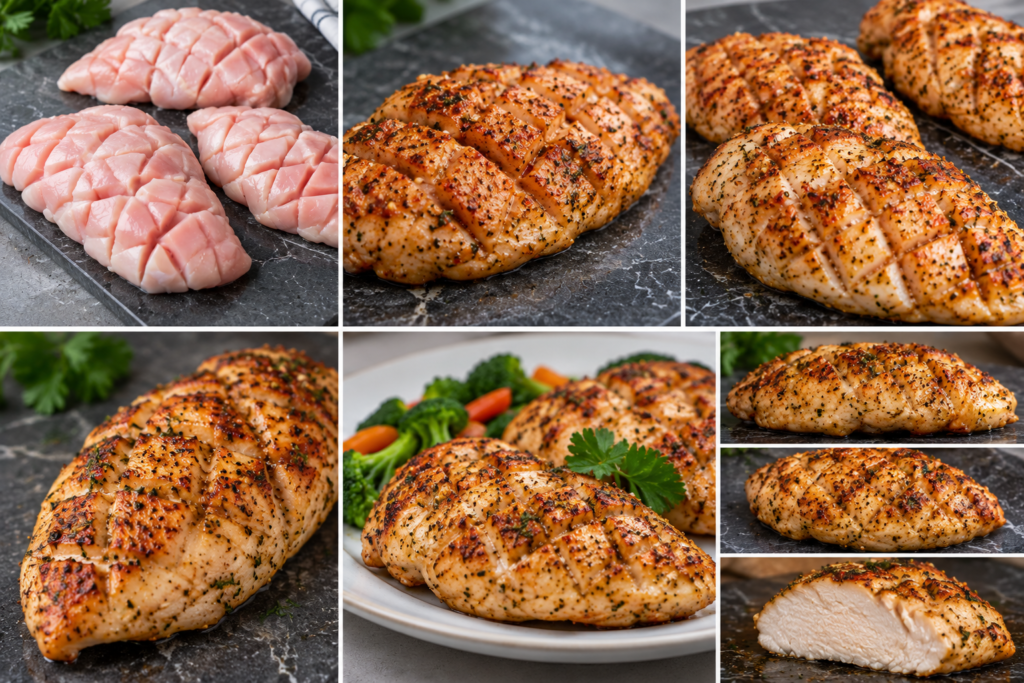
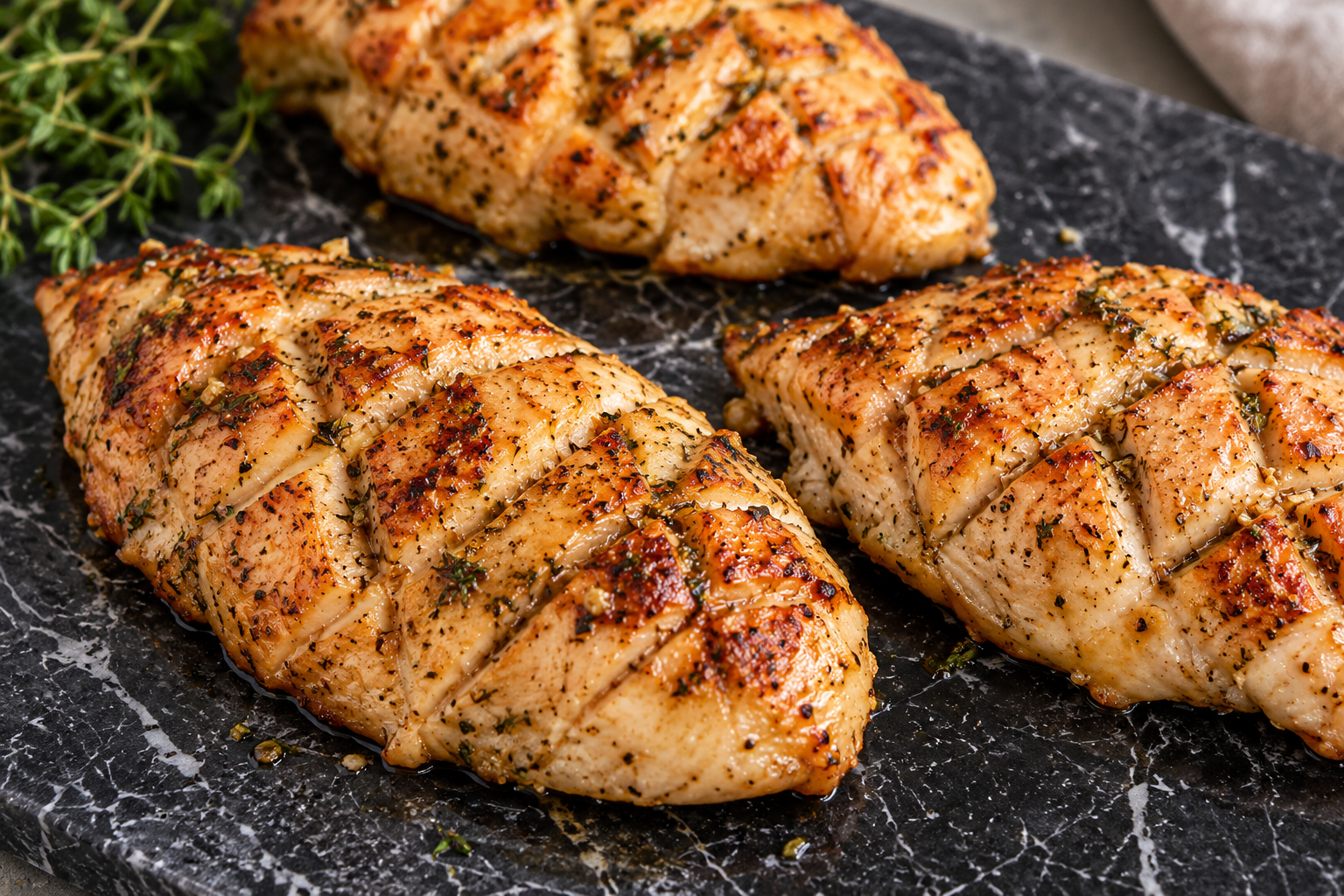
- Scored look (optional): make shallow criss-cross cuts on the top of each breast without cutting all the way through. Lemon wedges and chopped parsley make a pretty garnish, if you want it to look like the photo.
What can you serve with honey garlic chicken breast?
Quick answer: Simple sides work best, such as rice, mashed potatoes, pasta, or roasted or steamed vegetables.
The sticky glaze is rich, so plain sides let it shine. Spoon any extra sauce over rice or potatoes. Green beans, broccoli, carrots or cauliflower add color and a fresh bite.
How do you store and reheat leftovers safely?
Quick answer: Refrigerate leftovers within 2 hours, keep them 3 to 4 days, and reheat until they reach 165°F (74°C).
USDA advises dividing leftovers into shallow containers so they cool quickly, and covering them when you reheat. Bring sauces to a rolling boil when reheating. In hot weather above 90°F, refrigerate within 1 hour instead.
Is it better to bake chicken breast at 350°F or 400°F?
Quick answer: Neither is the only right choice. Cooks say 350°F is gentler, especially for thick breasts, while 400°F is faster and browns more. Either way, the chicken must reach 165°F (74°C).
This recipe is made on the stovetop, so I have not written oven times for it. If you want to bake plain chicken breasts instead, these answers may help. Oven times vary a lot with thickness and with each oven, so always check with a thermometer.
How long do chicken breasts take at 400°F?
Quick answer: One dietitian-written guide gives 18–20 minutes at 400°F for 4 oz breasts about 1/2 inch thick, baked uncovered. Thicker breasts take longer.
Should you bake chicken covered or uncovered?
Quick answer: Covering can help hold in moisture, while baking uncovered usually gives better browning. Many cooks choose uncovered for color and a better texture.
Quick answers: your honey garlic chicken questions
Do I really need a food thermometer?
Quick answer: Yes. USDA advises against relying on color, firmness, or time alone.
Can I bake this instead of pan-frying?
Quick answer: This recipe is written for the stovetop, so I have not given oven times. If you bake it, the goal stays the same: 165°F (74°C) in the thickest part.
Why flour the chicken?
Quick answer: The coating helps the chicken brown and gives the glaze something to grip.
Ready to try it?
Make this honey garlic chicken breast tonight and tell me how it turned out. Did you go with butter or oil, honey or maple syrup?
Leave a comment below and share your results!